
The Summary of IVD
In the past few decades, the development of in vitro diagnostic (IVD) technology has made great achievements. Especially the COVID-19 epidemic in the last three years has made more and more people understand and apply the COVID-19 test cards.
Some characteristics of in vitro diagnostic(IVD) reagents, such as quick results, simplicity, hygiene, early screening and diagnosis, high cost-effectiveness, reduced patient discomfort, and accessibility to remote areas, these technologies are full of attraction to the medical community .At the same time, the accuracy of IVDs is also considerable.In particular, our Hirikon detection reagents.
IVD tests are usually performed in a stable and suitable environment outside the body to detect biological samples such as blood, sweat, urine or blood, use in vitro testing reagents, kits, calibrators, quality control materials, etc. to test and verify the samples and detect their specific components, analyze the results, and obtain a diagnosis.

The core raw materials include diagnostic enzymes, primers, antigens, antibodies, etc. In addition, there are various fine chemical raw materials, including sodium chloride, sodium carbonate, various amino acids and organic acids, etc. The role of these fine chemicals is mainly to prepare the buffer solution system of diagnostic reagents.
The relationship between IVD and POCT
Compared with professional laboratory diagnosis, POCT only retains the core steps of “sample collection, sample analysis, quality control, effective results and interpretation report”, which greatly shortens the diagnosis time, and has great advantages in sample dosage, sample type, reagent convenience and professional requirements for operators.
The market and advantages of POCT
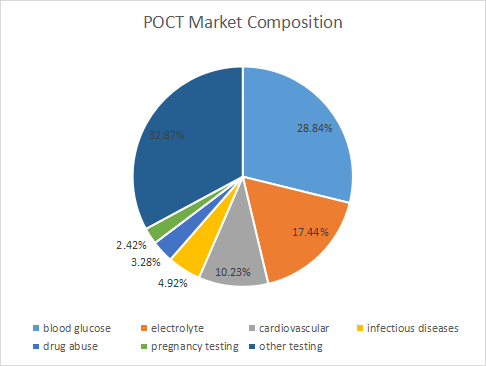
At present, the POCT market is mainly composed of 7 parts: blood glucose (28.84%), blood gas and electrolyte (17.44%), cardiovascular (10.23%), infectious diseases (4.92%), drug abuse (3.28%), pregnancy testing (2.42%) and other testing (32.87%). Among them,
Hirikon’s infectious disease detection reagents such as dengue, malaria, and pregnancy test strips and pens have a certain share in the market.Also,the tests of drug abuse could be customized by different requirements.
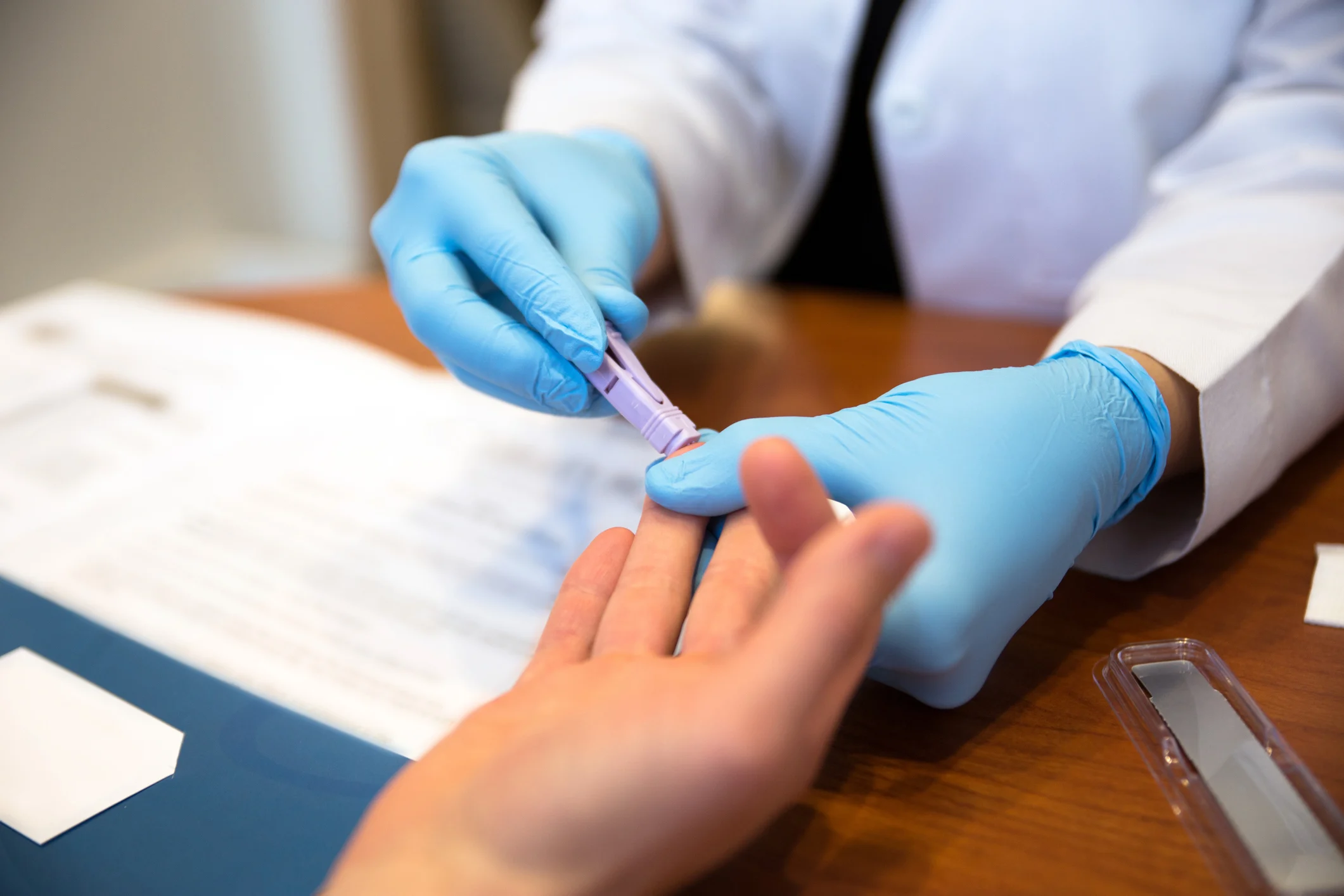
In addition to improving diagnostic, treatment, and monitoring practices, this new approach provides rapid, highly sensitive, and low-cost testing, resulting in increased patient satisfaction.
Because the detection method of POCT has three advantages of rapid detection, on-site sampling and simple operation, it conforms to the fast pace of modern society and personalized service needs, so that it has a wide range of application scenarios, and has become one of the most potential areas in the IVD industry, representing the future development direction of IVD. Its application scenarios include clinical examination, health management, epidemic control, food safety monitoring and even military and disaster relief, drug detection and alcohol detection and other customs and inspection and quarantine, criminal investigation and law enforcement testing and other public health fields.
The development and prospect of POCT
The field of POCT is also one of the hot spots in the current IVD industry development. From the perspective of statistical data, the listed enterprises of them all show a high gross profit rate. Wondfo Biological, Jiegeng Biological and Ming De Biological represent the leading level of domestic enterprises in the field of cardiac markers, inflammatory infection detection and other fields.
The core factor of their rapid growth is that the importance of rapid detection of mainstream cardiac markers (such as CK-MB, cTnl, BNP, etc.) is widely supported by evidence-based medicine. The detection of these markers has also been included in the guidelines for the prevention and diagnosis of heart disease.
At present, POCT products have been widely used in hospitals, ICU, emergency department, clinics and patients’ homes, which can detect most routine clinical indicators. The global POCT market size was approximately $10 billion in 2022 and maintained a compound growth rate of 8%.Many developing countries have large populations and large differences in medical resources. The market is still in the early stages of development, and the overall level is at the level of European and American countries in the 1990s. The penetration rate of terminals such as hospitals is extremely low, and POCT has great potential.
TheFuture Development of The IVD Industry Ultimately Lies in Two Directions: New Technologies and New Indicators.
In terms of technology, the four factors of automation, detection accuracy, detection speed and cost will become the main indicators to measure the detection technology. From the perspective of segmentation, POCT and molecular diagnosis will show a relatively rapid growth in the future, and automation pipeline, flow cytometry, microfluidic technology and gene chip technology are likely to become the main development trend of products.
In terms of indicators, new detection indicators developed by benefiting from research breakthroughs in basic disciplines may create new market demand or even subvert the original market pattern. For example, the anti-Mullerian hormone (AMH) detection system launched by Roche has shown many advantages compared with traditional methods (FSH, HCG, etc.) in the detection of female ovarian function, such as no fasting, only 2ml blood is required, not affected by the physiological cycle, rapid detection, and accurate results. Because of this, the product has won wide acceptance and recognition in the market, and has the potential to replace the existing detection indicators.